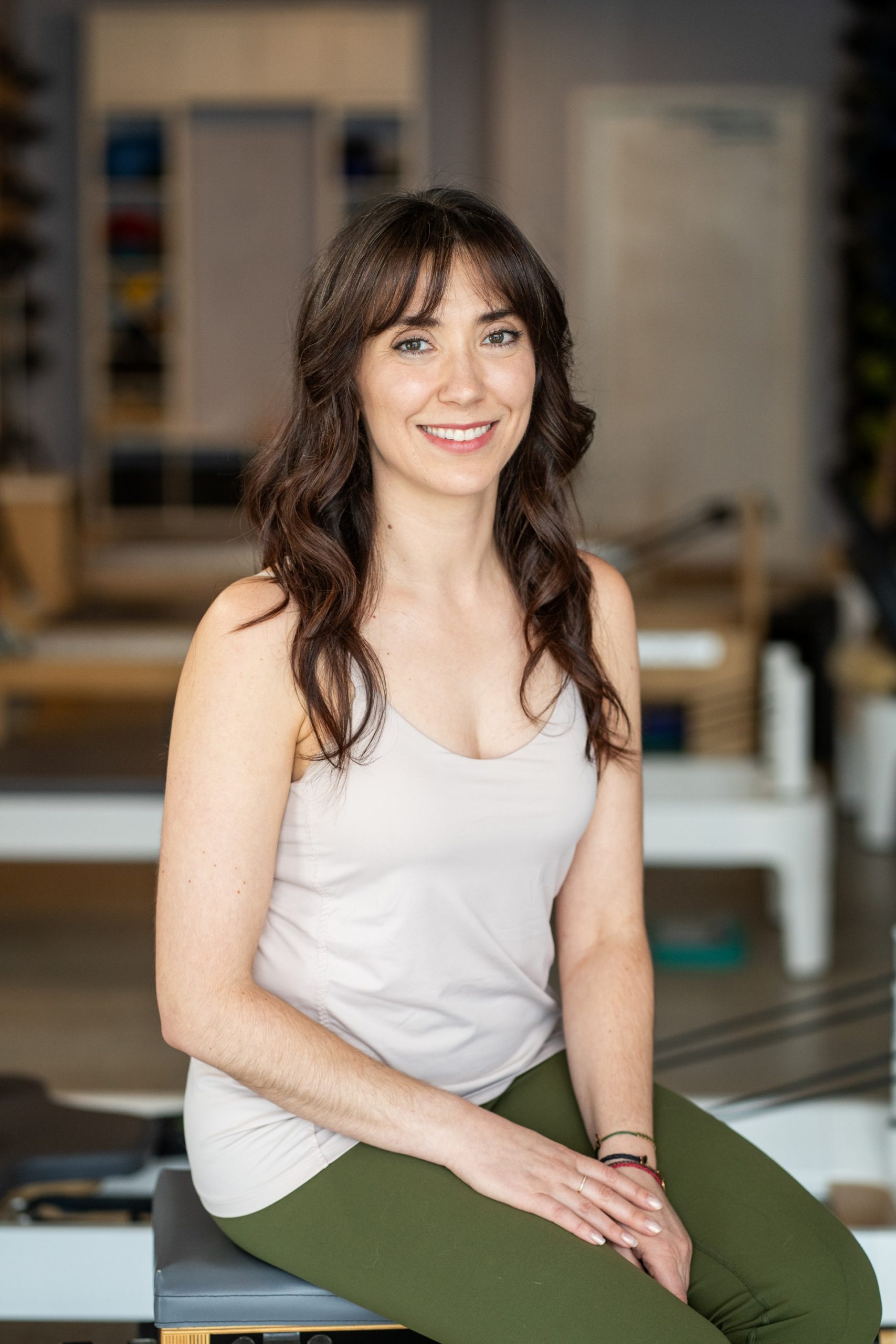
As an exercise hobbyist and movement professional, being faced with a new diagnosis of Autonomic Dysfunction has been daunting, but I’ve found that the Pilates movement philosophy and conditioning approach help to regulate the nervous system and metabolic pacing to keep loving movement despite postural orthostatic tachycardia syndrome. So here are 5 reasons why the Pilates method, as a physical reconditioning approach, is a valuable part of your care for postural orthostatic tachycardia syndrome (POTS).
DISCLAIMER: This is my personal approach to managing dysautonomia. These are straightforward and offer a simple approach to understanding a complex concept, especially as it relates to individual cases and one’s personal health. Always consult your physician before starting any exercise program. Before you begin Pilates as part of your care for postural orthostatic tachycardia syndrome, you should check with your doctor and get cleared to exercise. Your doctor can help you identify target heart ranges and goals for your exercise therapy.
What is Postural Orthostatic Tachycardia Syndrome?
A medical condition under the umbrella term dysautonomia, it relates to the dysfunction of the Autonomic Nervous System. Your autonomic functions are the body’s systems you don’t even need to think about, such as heart rate, blood pressure, digestion, breathing, kidney function, and temperature regulation. People with dysautonomia have trouble regulating one or more of these systems. There are several different types of autonomic dysfunction, and I will be circling around just one: how to care for Postural Orthostatic Tachycardia Syndrome (POTS) with Pilates.
When it comes to exercise, people with dysautonomia may experience a higher heart rate at the onset of exercise, blood pooling due to slow venous return, especially when standing, and poor circulation through working muscles, resulting in slow lactate clearance. This can make it hard for individuals to do daily activities, let alone exercise! But movement is helpful for individuals with POTS.
What are the exercise recommendations for individuals with Dysautonomia?
The exercise recommendations for individuals with POTS include low-orthostatic-stress exercises, such as those performed in horizontal or supported positions. Avoid aerobic spikes where the heart rate rises too fast. And incorporate recovery intervals long enough for circulation to return to normal.
Pilates and POTS Exercise Care Recommendations
- The Pilates approach to rhythm and pacing supports sustained exertion.
The POTS condition may cause the heart rate to rise earlier in exercise, even if you haven’t reached max workload. The circulatory system can’t keep up with the metabolic demand. This is especially important for individuals with dysautonomia because lactate does not clear quickly without adequate circulation, so the muscles work less efficiently. The muscles may become metabolically stressed, resulting in the heavy, oxygen-starved feeling in sore legs. Exercise that keeps your body in aerobic metabolism means the oxygen demand is met with minimal lactate accumulation, and recovery happens faster.
So try Pilates. The gentle but consistent pace of Pilates works really well as part of POTS care because it keeps the person in aerobic heart rate zones, allows the body to meet circulation demands, gradually increases oxygen delivery, and keeps lactate production low so the body doesn’t produce more lactate than it can metabolically eliminate through proper circulation.

- The Pilates approach to breathing improves heart rate recovery.
The POTS condition can make it hard to catch your breath and not spike your heart rate, even if you’re just on a walk. Not only does the body’s heart rate increase, but less blood is pumped per heartbeat, especially when upright or exercising, causing anaerobic metabolism to occur sooner during exercise.
Breathing is a Pilates principle; within the method, we focus on diaphragmatic expansion to stimulate parasympathetic activity. The Pilates practice regularly transitions from effort to recovery and maintains efficient oxygen exchange during exercise by making inhales and exhales integral to the practice. In Pilates, the mechanical workload is lower, and movement progresses more gradually, with exercise pacing that is more intermittent. Therefore, the heart rate usually stays within the aerobic training zones.
- The Pilates method is a mindful movement modality and, because of that, supports conscious intensity.
For people with POTS, learning how to work the body without pushing past the body’s stress signals is a key part of care.
Mindful movement modalities, such as Pilates, support the downregulation of sympathetic output. This trains your fight-or-flight response (nervous-system regulation), which is important for stabilizing blood pressure, regulating breathing and heart rate, and supporting circulation. While heart rate spikes are real, a better measure of cardiovascular strength is your body’s ability to recover between spikes, measuring your adaptation to exercise stress.
- Many Pilates positions reduce orthostatic stress.
Ways to help with the deregulation of circulation due to POTS include lying supine and then slowly working upright.
Pilates positioning, as well as specific exercises, actually use gravity to assist circulation, so more blood returns to the heart, and the heart rate doesn’t need to compensate as aggressively. Focusing on the strengthening aspect of Pilates, most exercises operate within the aerobic metabolic range, with moderate resistance and a controlled pace. That’s why Pilates can feel challenging, but it doesn’t put the same metabolic stress on the body, which helps prevent the accumulation of lactate, so you don’t get too sore afterward, like when running or other high-intensity sports. Making Pilates a good choice for POTS care and exercise recommendations.

- Pilates muscle activation assists venous return from the lower body.
Peripheral circulation and metabolic clearance are where autonomic dysfunction tends to show up. For someone with POTS, there is inefficient blood flow, especially during exercise.
Pilates trunk integration builds lower-body strength through core connection, improved breathing control, and leg strength and endurance. Emphasizing lower-body strength, stability, and power improves venous return. Bending and stretching your legs, flexing and pointing, and reaching – toning the muscle – actually helps pump deoxygenated blood from the feet back up towards the heart.
Personally, I seek to train my cardiovascular fitness. I choose to measure heart rate zones, VO2 Max, and recovery windows. To improve my cardiovascular fitness despite having POTS, I balance higher-intensity intervals with recovery periods and gradually progress through intensity levels, with recovery intervals long enough for my lactate to clear and my heart rate to normalize. I have to be careful with sustained effort. It’s not that I have to give up my love of cardio, but balancing it with Pilates provides a sustainable conditioning baseline while still caring for POTS. Especially to keep myself moving on days I might feel less invigorated. Above all, listen to your body and meet yourself where you’re at.
Fu, Qi et al. “Cardiac origins of the postural orthostatic tachycardia syndrome.” Journal of the American College of Cardiology vol. 55,25 (2010): 2858-68. doi:10.1016/j.jacc.2010.02.043
Hogwood, Austin C et al. “Determinants of Exercise Intolerance in Postural Orthostatic Tachycardia Syndrome: A Systematic Review.” Exercise, sport & movement vol. 3,4 (2025): 10.1249/esm.0000000000000055. doi:10.1249/esm.0000000000000055
Van Iterson, Erik H et al. “High Submaximal Exercise Heart Rate Impacts Exercise Intolerance in the Postural Orthostatic Tachycardia Syndrome.” Journal of cardiopulmonary rehabilitation and prevention vol. 40,3 (2020): 195-201. doi:10.1097/HCR.0000000000000485
Mayo Clinic Staff. “Exercise intensity: How to measure it.” Mayo Clinic, https://www.mayoclinic.org/healthy-lifestyle/fitness/in-depth/exercise-intensity/art-20046887. Accessed 10 March 2026.
Dysautonomia International: Dysautonomia Awareness, Dysautonomia Advocacy, Dysautonomia Advancement, https://www.dysautonomiainternational.org/index.php. Accessed 10 March 2026.
All ideas and assertions expressed in The CORE are those of the individual contributors, offered to spark conversation, enrich understanding/inspire growth and share diverse perspectives within our community. They may not necessarily reflect the views of Balanced Body®.

Leah Strauss Grant, BFA, NCPT, is a Nationally Certified Pilates Teacher, and Balanced Body Educator and Integrative Movement Specialist with a decade of experience helping people move with strength, balance, and awareness. Previously published in the Core and a guest on Pilates Perspectives, through her extensive training, including MELT and Postural Restoration Institute, she has developed a profound respect for the interconnectedness of body and mind, a perspective she infuses into her teaching at Pure Movement Pilates Studio, Fort Wayne, IN.”