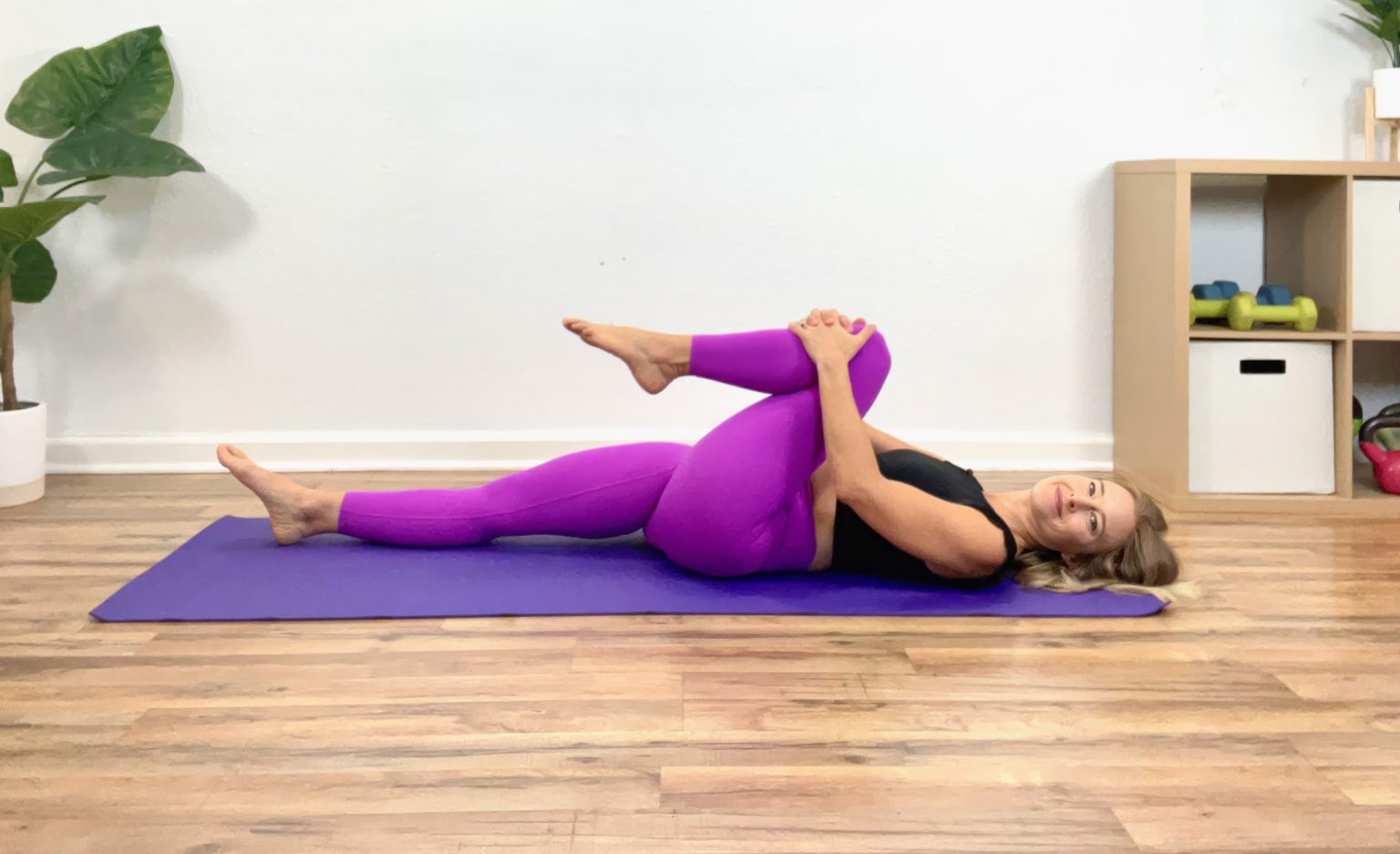
“I had a hysterectomy and have no idea how to start exercising again.”
Hysterectomy is the second most common surgery performed on women in the United States. Statistics tell us one in three women will have had a hysterectomy by the time they are sixty years old. Yet for how common this surgery is, there is shockingly little information and guidance for women when it comes to moving their bodies and returning to exercise after a hysterectomy.
I was forty-two years old when I had my own hysterectomy. Other than being told not to lift more than ten pounds, I was given little if any detail around when or how I could return to movement. A quick search online at the time told me I wasn’t alone in feeling confused and frustrated with the lack of exercise guidance for women after having a hysterectomy. Being a physical therapist and movement teacher allowed me to feel comfortable guiding myself through my rehab. It also made me extremely sensitive to the plight of women around the world wanting to return to exercise after a hysterectomy – and not knowing how.
As Pilates instructors, we will oftentimes be the first movement teacher a woman sees after this surgery and it’s imperative, we understand how to support, nurture and guide our clients so they can return to feeling safe and confident in movement, exercise and life.
The Basics
It’s important to understand the anatomy and procedures involved in a hysterectomy when working with women who have undergone this surgery.
While every hysterectomy involves the removal of the uterus, that is sometimes where the similarities end. Here are some important nuances and individual considerations to understand:
- In addition to the uterus, hysterectomies can involve the removal of one ovary, both ovaries, fallopian tubes and/or the cervix.
- The surgical procedure may be done through the vagina (which would involve no external incisions), laparoscopically (small holes in the abdomen) or with a full abdominal incision.
- There may be concurrent procedures done during a hysterectomy. For example, I had major pelvic floor reconstruction done at the same time as my hysterectomy surgery, leading to a much longer and more complicated healing process. Other women may experience endometriosis excision or the placement of a bladder sling during the surgery.
- Every surgeon is different when it comes to the exercise and movement restrictions they place on their patients. While the typical restriction for a hysterectomy done in isolation is not lifting more than ten pounds for six weeks, this can change dramatically based on the surgeon, additional surgical procedures done and other extenuating circumstances. It is vital to know if your client remains under any restrictions from their surgeon or if they have been cleared for all exercise and movement.
While you do not need to know every detail of your client’s operative report, it is important to understand the basics such as what type of surgery was done, if they have received any physical therapy, in what ways they still feel limited or weak and if they have been cleared by their surgeon for exercise.
Longterm Expectations After a Hysterectomy
Assuming there are no complications during surgery or recovery, women can fully expect to return to their previous strength and activity levels. There are no long term or lifelong limitations typical of a hysterectomy. While recovery takes time and consistency, women can absolutely expect to recover the quality of life they had previous to surgery, and in many cases improve on that. There are a few considerations unique to a hysterectomy to keep in mind as you develop a movement plan for those after hysterectomy:
- In the case of both ovaries being removed during a hysterectomy, that woman wakes up from surgery in surgical menopause. There can be additional symptoms to consider for these women involving the sudden drop of estrogen and progesterone after surgery. For example, they could suddenly be facing hot flashes, mood swings, joint pain, brain fog and more in addition to recovery from the surgery itself. While this doesn’t directly affect your movement plan, it can add additional variables to how that woman responds to exercise after surgery. It’s important women dealing with surgical menopause have support and resources from their doctors and/or surgeon for this transition.
- Women who have a hysterectomy are 40-60% more likely to develop a pelvic organ prolapse during their lifetime compared to those who haven’t had a hysterectomy. While this statistic is often the one that causes fear of movement in women after surgery, it doesn’t have to be a limitation. Teaching proper movement and pelvic floor health can help decrease this percentage and allow women to feel confident in exercise and their daily activities (more on this below).
The Fear
It is normal and expected for clients to have some fear or hesitation when returning to movement after an injury or surgery. I have seen it after nearly every type of surgery imaginable during my career, and I consider part of my job to be both educator and cheerleader—helping clients understand what their bodies can do and feel confident moving again.
Over the years, though, I have noticed a particular kind of fear and anxiety in some women after hysterectomy that seems to run deeper than what I typically see after a knee or shoulder surgery. I believe this comes from a combination of the deeply personal nature of the surgery and the lack of specific guidance many women receive about returning to exercise.
After an ACL reconstruction or rotator cuff repair, for example, patients are typically given detailed rehabilitation protocols that gradually progress them back to strength and activity. After hysterectomy, the guidance can feel much less specific: don’t lift more than a certain amount for a period, avoid particular activities while tissues heal, and then, eventually, you’re cleared.
Some women have the previous body awareness, professional support or resources to seek out those answers and advocate for themselves. Others are left with uncertainty, and that uncertainty can gradually turn into fear of movement itself.
I have received countless messages from women who are years beyond their hysterectomies asking whether it is safe for them to lift weights, perform abdominal exercises or return to activities they once enjoyed. In some cases, they have spent years unnecessarily avoiding exercise because they are still afraid of causing damage.
That matters. We know how important resistance training, cardiovascular exercise and regular movement become as women age. When fear keeps a woman from participating in those activities long after her tissues have healed, the consequences extend well beyond her surgical recovery.
This is an important piece to remember when a client comes to you after hysterectomy—even if her surgery was years ago. While you may not need to worry about any restrictions from their surgeons, it’s important to give these women the same support you would for clients you are seeing shortly after surgery. Take some time to listen to their concerns and offer a supportive and positive place they can start to feel connected to their bodies again. You may not simply be helping her rebuild strength. You may also be helping her rebuild trust in her body.
When To Start
As a physical therapist I oftentimes work with women the first week after surgery to help support proper breathing, gentle movement and activities of daily living. Typically, women won’t be returning to Pilates sessions, though, until well past the lifting of their restrictions by their surgeons. It’s important to realize that just because they have been cleared to exercise, this does not mean they are ready to jump back into their previous level of classes or full core work. Here are a few considerations to keep in mind as you work with women returning after a hysterectomy:
- Breathing
- In addition to regulating the nervous system, proper breathing helps control intra-abdominal pressure and pelvic floor function, both of which are vital after a hysterectomy. Take some time to focus on proper and full breathing patterns.
- Thoracic mobility
- Good thoracic mobility is one of the keys to avoiding downward pressure on the pelvic floor. Exercises such as Spinal Rotation are extremely valuable for clients after a hysterectomy.
- Function
- Find out what activities and positions your client needs to be in to feel capable and strong in her life. You may need to focus time on balance and getting on and off the floor or helping your client return to a job on her feet or her favorite pickleball league.
- Progressive strengthening
- Even a client who has healed and recovered with gold stars has been off of exercise for on average, eight weeks. It will take some time and intention to return to her previous activity level and strength. Make a plan, set expectations and be intentional about how you progress.
Movement Considerations
- Don’t Treat Your Client Like She Is Fragile
I believe one of the reasons women fear movement even years after a hysterectomy is because, at some point, a well-meaning but incorrect fitness instructor, friend or online forum told them they shouldn’t exercise after a hysterectomy. While it’s important for you to understand your client’s health history and current situation, it is also important that you become a resource for safe and progressive movement. As long as your client has healed and has been medically cleared for exercise with no restrictions, she can begin moving and strengthening again. In fact, staying strong, resilient and consistent with exercise are imperative in building a healthy pelvic floor, strong bones and overall vitality. Encourage her and remind her of the power of her body.
- Assess
Just like you would for any first-time client in a private session, doing a movement assessment can give you valuable information about your client’s current level of ability. These are a few things you may want to assess:
- Breathing pattern
- Single leg balance
- Squat
- Getting on and off the floor
- Sitting up from a supine position
- Posture
- Thoracic rotation
- Ability to pick something up from off the floor
This information can help you plan and progress your sessions with your client.
- Body Connection
After any injury or surgery, it is extremely common for there to be a loss of body connection. Factors such as pain, communication issues with the doctor, returning to work, surprising weakness after surgery or lack of sleep all contribute to a feeling of being separate from one’s body. With a hysterectomy there is an added possible factor of mourning. While some women are excited about this specific surgery, some of us didn’t necessarily choose it and recovery involves working through various emotions and acceptance. An important part of the work you do as a Pilates instructor is helping your clients feel their bodies again. This may include proprioception work, breathing practices, body awareness, visualization and more. In some cases, just asking your client periodically “what are you feeling right now?” or saying “it’s ok if this feels different than before surgery” can help them connect to and accept where their bodies are right now. Before jumping into cues about tightening the core or pulling the belly button in, make sure you are letting your client simply move and feel what is available to her right now and support that body reconnection.
- Pelvic Floor
While it’s true there is a higher percentage of pelvic organ prolapse (POP) in women who have had a hysterectomy, it’s important to reiterate that doesn’t guarantee by any means that women with hysterectomy are destined to have a prolapse. It’s important to make that distinction in women with fear around movement after a hysterectomy. By implementing pelvic floor awareness, education and lifestyle management techniques, we can help our clients move freely while also protecting their pelvic floor health.
The most important and basic concept to teach and be aware of is preventing downward pressure on the pelvic floor. We can do this in two ways:
- Creating space in the abdominal cavity. There are certain positions and biomechanical changes that automatically compress the abdominal cavity and lead to downward pressure on the pelvic floor. These include forward head or kyphotic posture, limited thoracic mobility, constant tucking of the pelvis and limited pelvic mobility, just to name a few. You will want to make sure you are including movements that facilitate lengthening in the torso, mobility, postural awareness and a general idea of space in the abdominal cavity.
- Avoiding movements or activities that increase intra-abdominal pressure. There are the obvious culprits such as doing a forceful movement while holding your breath (known as a Valsalva maneuver) and more nuanced and individualized perpetrators. For example, after my own surgery I returned to arms in straps on the reformer fairly quickly (most likely due to my previous Pilates experience and body awareness). Chest expansion, on the other hand, caused immediate downward pressure for me and was something I needed to avoid for quite a while as my body relearned that specific movement. Getting ongoing feedback from your client, while also teaching her to receive and interpret feedback from her body, will be extremely important throughout your sessions.
Pelvic floor awareness and health goes well beyond teaching a basic Kegal. It includes hip strength and range of motion, overall mobility, body awareness and lifestyle techniques.
- Abdominal Work
It is understandably daunting for clients to begin abdominal work again after a hysterectomy, particularly if they underwent a surgery with a large abdominal incision. They need to feel safe and strong in their core long before attempting a teaser or hundreds, which means focusing not just on the rectus abdominus but on the obliques, lower abdominals, hip muscles, pelvic floor and back. Start with basic breathing with supine leg reaches and toe dips. Progress into articulating bridges, single leg tabletop positions, side lying leg work, quadruped positions and modified side plank. If roll ups feel out of reach, work on the rolling down to focus on the eccentric work. Break larger exercises down into pieces to help your client feel more confident when putting it all together. Teaser becomes much more doable down the line if your client already feels comfortable and strong with back articulation, hip mobility and eccentric roll downs.
- Get Upright
Being supine and side lying on the mat or reformer are natural places to start after an injury or surgery, but you’ll also want to incorporate positions in sitting and then standing to help work proprioception, balance and function. Being upright forces the body to orient itself against gravity, helping the joints, tendons, ligaments and muscles support the body in a weight bearing position.
- Start Adding Load
Start with bodyweight moves such as squats, leg lifts and lunges in standing. This is a direct follow up to the work you did above getting your client upright. Add quadruped positions to include weight bearing through the upper body. Then begin to add some resistance in the form of springs on the reformer, bands and light dumbbells.
- Know When to Refer Out
When you have worked with clients long enough you will experience those situations where someone needs more than you can give. Whether due to scope of practice limitations, lack of expertise or a need for more information, it is important to know when it’s appropriate to refer out to a health care professional. Your first recommendation would be for your client to see her own surgeon or doctor again in any case of increased pain, slow healing or general questions. Other helpful referrals for clients after hysterectomy include women’s health or pelvic floor physical therapists. Your job is to do what is best for your client, and occasionally referring to another professional is what is needed.
My Experience
I have a long history of endometriosis and severe pelvic organ prolapse, including multiple laparoscopic surgeries. After years of consults and rehab and exploring various options, I had a hysterectomy at the age of 42. While my previous surgeries and my expertise as a physical therapist helped me prepare for my own hysterectomy, I proceeded to be shocked at the lack of clear instruction and guidance for returning to exercise and movement after my surgery. It seemed inconceivable to me to be told not to lift anything more than ten pounds for ten weeks, and then to be able to do whatever I wanted after that. Not only did I have a robust weightlifting routine and Pilates career to return to, I had a two-year-old toddler I was desperate to lift and hold again. I made it my mission to create a safe and progressive return to exercise plan so I could not only safely lift my baby at the ten week mark but eventually excel at all the activities I loved so much.
While doctors may believe a woman will be back to herself in a few months, I prefer to add some context to that expectation. Yes, she will certainly be back to daily function such as climbing stairs, going on walks, getting in and out of bed, driving and playing with her kids or grandkids. Yes, she will most likely be able to return to her basic Pilates class or light weight lifting sessions. In general, though, it takes a year after surgery to feel completely at home in her body again. There are new movement patterns to learn and major muscles that need to heal (especially if there was a full abdominal incision). She must move past any fear of movement and be able to connect with her body again. I had to return to all the foundational Pilates moves to finally have the strength and mobility to do a teaser again six months after surgery. This happens in small ways every day that build on themselves so that, eventually, there is freedom of movement again. It doesn’t happen overnight, but it does happen with patience, consistency and guidance.
In Summary
I have been a physical therapist and Pilates teacher for over 25 years, and I continue to believe that Pilates is an undeniably valuable way for women to connect to their bodies. You can offer women recovering from a hysterectomy a path towards embodiment, safety and confidence in their bodies and movement as a whole. Meet her where she is and be willing to walk by her side and celebrate her strength as she learns how to feel at home in her body again.
All ideas and assertions expressed in The CORE are those of the individual contributors, offered to spark conversation, enrich understanding/inspire growth and share diverse perspectives within our community. They may not necessarily reflect the views of Balanced Body®.

Jessica Valant
Jessica has been a licensed physical therapist and certified Pilates instructor for more than 25 years. She is also certified as a Perimenopause and Menopause Specialist by the Integrative Women’s Health Institute. Jessica is a regular contributor to the women’s health and physical therapy spaces through speaking, conferences, writing and creating online content.
Jessica has a successful YouTube channel, podcast, membership site and social media platform dedicated to empowering women in their bodies. She has been featured in The New York Times, Pilates Style Magazine, Shape, Buzzfeed, Yoga Journal and Thrillest.
You can find her free hysterectomy resource guide at https://jessicavalant.com/complete-hysterectomy-guide, including her ten-week post hysterectomy workout program.