
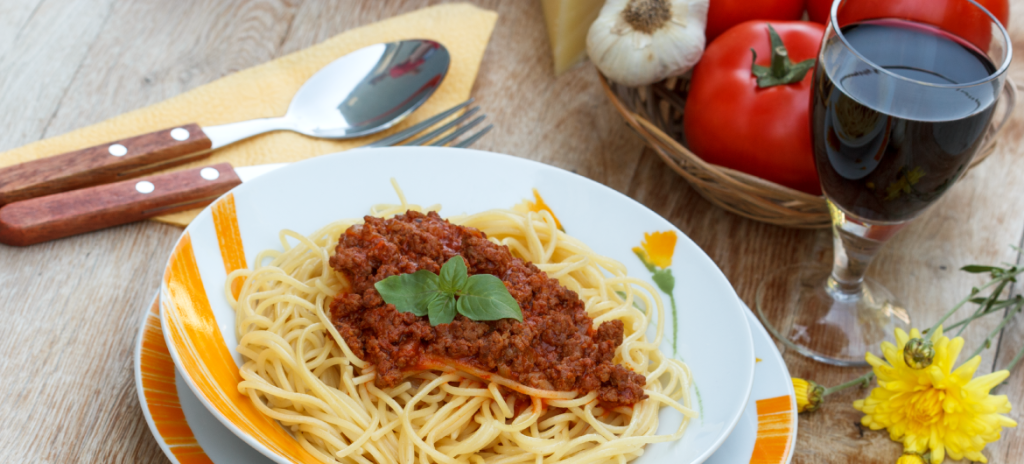
I admit it, I am a pasta freak. I could eat it in some form every single day. Italy is one of my favorite places, and it’s where I’m at my gastronomic happiest. When I was in Piemonte staying with some German friends, they made the most delicious pasta sauce that they served with spaghetti made by a local woman who was truly an Italian nonna. We enjoyed it in the courtyard that warm summer evening, the fireflies lighting up around us.
Because we were in Piedmont, we drank a lot of wine from that area; it’s renowned for its Nebbiolo—if you’ve ever had Barolo or Barbaresco, this is where it came from—but for this kind of dish I like something a little simpler. Barbera fits the bill perfectly. It tends to be lighter in style, with enough tannin to cut through the richness of the sauce, acid to counter the sweetness of the tomatoes, and fruit to remind you what you’re there for. In Piedmont, there are a few Barbera DOCs (Denominazione di Origine Controllata). This denotes a designated area of protection/origin, which guarantees certain criteria are met. To see all the DOCs and DOCGs (Denominazione di Origine Controllata e Garantita) for Barbera here’s a great resource. Wine.com, BevMo, and Total Wine and More will usually have a few, both Italian and domestic.
As an alternative, I’d recommend a Chianti (Sangiovese). Though the word “Chianti” may conjure up images of Anthony Hopkins as Hannibal Lecter, it is much more than that bottle of wine encased in a straw basket you saw on every table of your neighborhood Italian joint. Chianti Classico is a world-renowned Tuscan wine that ranks up there with Barolo as one of the top wines of Italy that is enjoyed and revered by both Italians and wine drinkers all over the world. It, too, has all the aforementioned qualities to pair nicely with the sauce.
Here’s where it gets a little more complicated. You may also come across simply Chianti, or other terms attached to it, like Riserva or Gran Selezione. You may also see other styles or areas where Sangiovese is made in Tuscany, such as Vino Nobile di Montepulciano. The various designations all alter the percentages of wine varieties included in the wine, oak treatment, alcohol level, appellation, and/or aging requirements. Confused yet? You’re not alone. Italy’s reputation as one of the most confusing winemaking regions to learn about is not without merit! “Wine Enthusiast” published this great beginner’s guide to the region. So, to keep things simple, stick with a Chianti Classico until you’re ready to explore. There is much Sangiovese to be tried from around the world.
Now onto the recipe. This is in no way authentic, and it has a “secret” ingredient or two that add richness, umami, and a bit of kick. I always encourage people to play around with their recipes and make them their own, to their own tastes and preferences.
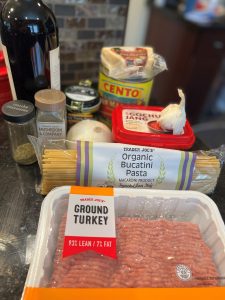 Secret’s in the (Pasta) Sauce
1 lb ground turkey or beef
1 medium onion, diced
2 tbs minced garlic
2 tsp Italian Seasoning blend
Hunk of Parmesan cheese rind, about 2-3” long and 1” thick
(These are my “secret ingredients.”)
1 tsp Gochujang (optional) – this is a fermented red chili paste that is sweet, spicy, and savory. It’s used in Korean cooking.
1 tbs Mushroom and Co umami seasoning (optional)
1 tbs Better Than Bouillon (any variety, though I’d recommend sticking with whatever kind of meat you’re using, e.g. ground turkey with Chicken Better Than Bouillon)
1 cp red wine (always use a wine you’d drink.)
1 can of San Marzano tomatoes, whole
1tbs tomato paste
Salt and pepper to taste
1 lb pasta
For an excellent homemade pasta recipe, check out this simple one from Allrecipes.
You can make this either in a slow cooker or on the stove top.
In a stockpot, add just enough oil to cover the surface of the pan. Heat oil until there is a slight sheen. Add ground turkey. (You can skip the oil if using beef, or add just a tiny amount.) Cook, stirring occasionally, breaking up the meat. Once meat is browned, drain off a portion of the fat if you desire (especially if using beef). Leave some, as this will enhance the flavors.
Add the Italian seasoning blend and the Umami seasoning. Pinch of salt and pepper
Add the onion and cook until slightly translucent. About 3-4 minutes.
Add garlic and cook until fragrant. About 2-3 minutes.
Add wine to deglaze. Once the alcohol has cooked off, add the can of tomatoes, the Gochujang, and the cheese rind. Bring to a boil, then lower heat to simmer.
Cook for several hours, covered. Break up the tomatoes as they cook. Taste a few times during this process and try not to eat it all. Simmer uncovered for all or part of the cooking for a thicker sauce.
Note: add salt and pepper at any point during the process, but if you choose to use Better Than Bouillon, be aware that it adds a fair amount of salt.
Bring a pot of salted water to a boil and cook pasta until it is just shy of done and very al dente.
Heat a large skillet over medium and transfer some of the sauce to the skillet. Add desired serving size of pasta and stir gently to combine. You want the sauce to gently penetrate the pasta. Cook Plate using large pasta bowls and top with freshly grated Parmesan cheese. Add some crusty bread on the side. I actually like to brush my slices with a bit of EVOO and bake at 350 until nice and crunchy, then scrape fresh garlic cloves on it.
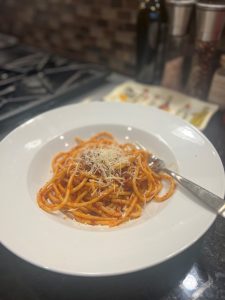 If you have any sauce leftover, store in an air tight container and refrigerate. Or freeze and use later.
You can also make this vegan and dairy-free by omitting the cheese and using finely diced mushrooms or meat alternative, like Impossible Meat. Go gluten-free using a non-wheat pasta.
All ideas and assertions expressed in The CORE are those of the individual contributors, offered to spark conversation, enrich understanding/inspire growth and share diverse perspectives within our community. They may not necessarily reflect the views of Balanced Body®.

Beth Merrill-Belval loves eating and drinking as much as she loves running and Pilates. She is a Certified Sommelier and has achieved certifications of French Wine Scholar, Italian Wine Professional, and Level 3 of the Wine Spirit Education Trust, through which she is currently pursing the fourth level of Diploma. Beth has also been a Pilates instructor for over ten years. Her favorite exercise is Teaser on the box... her least favorite is Stomach Massage. She also spends as much time cuddling her dogs as they'll let her. You can find her sharing her foodie adventures on Instagram at @sactownwinoandfoodie.
