
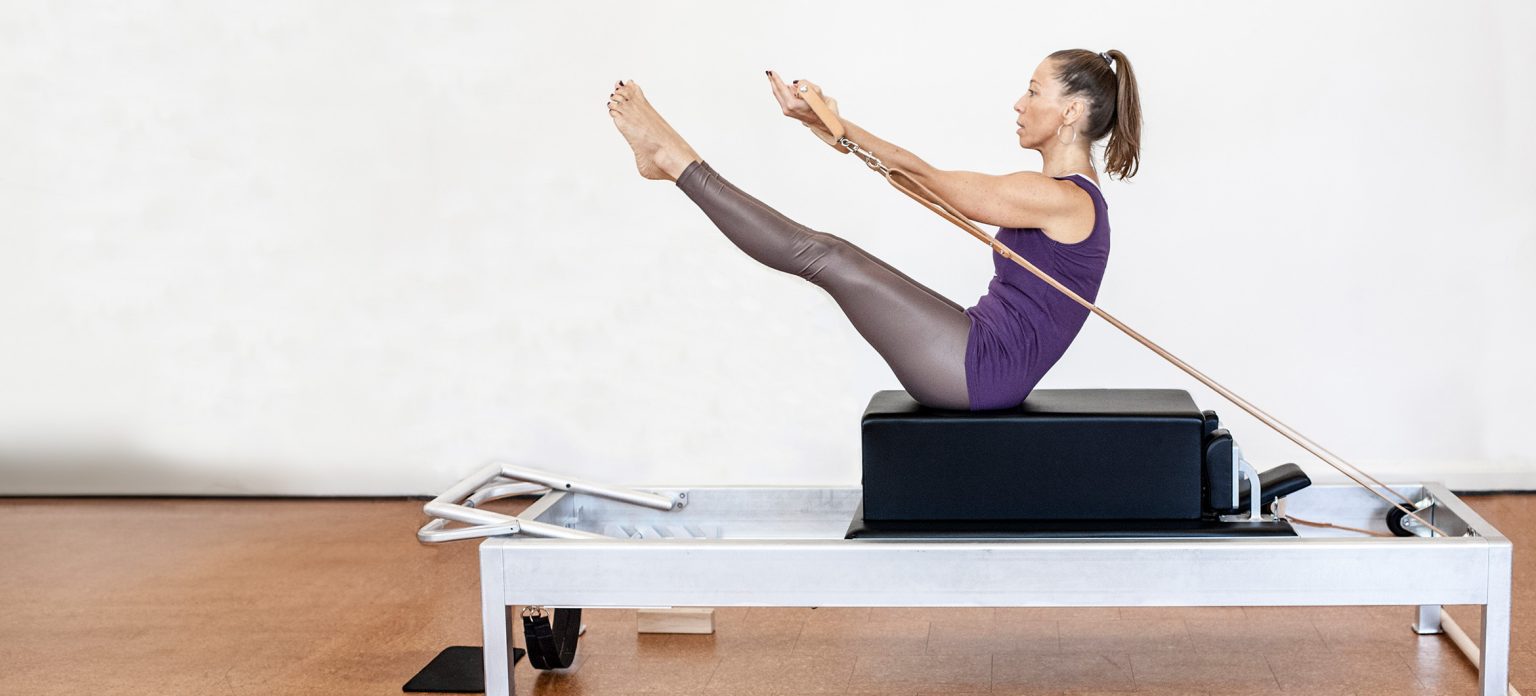
I will never forget the day when one of my long-term clients asked me why she should pick up the box during the short box series instead of me. As a Pilates instructor, I understand that the movements we do in the studio can be translated into our everyday lives. However, recognizing the correlation can be difficult for someone who was never taught that.
Let me take you back to Joseph Pilates’ studio in New York City when he was still alive. It was an open gym, similar to my mentor Jay Grimes and John Steel’s description in his book called “Caged Lion.” When you attended your first lesson, Joseph or Clara Pilates would teach you a few exercises on the reformer and maybe the mat. After a couple of lessons, you would be on your own. Of course, there were photos of the exercises on the wall, and Joe and Clara would be there to correct and assist everyone as needed. As soon as the client was ready to progress, they would add a couple of new exercises, but that was it. There were no notes. It was just you, the reformer, and your routine. Clients were independent from day one. They had to be focused enough on their bodies to know what to do.
From day one, clients were taught to be responsible for their own workouts and safety in the studio. The instructor acted as a facilitator or guide, monitoring clients for better alignment, effective pace in the workout, and hands-on adjustments, among other things. However, being independent goes beyond just knowing the order of exercises.
“There’s a point where you become Pilates and Pilates becomes you,” is one of the many valuable insights shared by Jay Grimes in his workshops. This means that how you perform Pilates exercises in the studio will translate into how you perform similar tasks outside the studio, like picking up a bag of groceries. Additionally, Pilates requires a lot of problem-solving – such as figuring out how to sit on the short box, pick up the strap, and tuck one foot after the other. These skills may come naturally when we are young, but as we get older, they become more challenging. Even simple things like setting up the extension straps to do frogs and circles can teach us fine motor skills. In summary, if your Pilates instructor is doing little for you, you can apply the skills you learn in Pilates to your life outside the studio.
Being independent teaches you to be self-sufficient and recognize when your body performs specific movements, such as climbing stairs, similar to “going up front” on the Wunda/High Chair. Similarly, when sitting up, you can use your center just like you do during Rolling Like a Ball or the Roll Up. Remembering the instructions given by your instructor in the studio can help you make good choices outside the studio, preventing injuries.
Pilates goes beyond the studio, promoting self-awareness and autonomy. Daily challenges become easier by applying Pilates principles of problem-solving, body awareness, and self-sufficiency. We develop a deeper connection with our bodies, improving well-being and lowering injury risk. Let’s take these lessons and move with intention and confidence in every aspect of our lives.
All ideas and assertions expressed in The CORE are those of the individual contributors, offered to spark conversation, enrich understanding/inspire growth and share diverse perspectives within our community. They may not necessarily reflect the views of Balanced Body®.

Daniela Escobar is the founder and owner of Westwood Pilates in Los Angeles, California. With over 19 years of experience, Daniela is a dedicated teacher and practitioner of classical Pilates. Since completing her certification, she has passionately shared her expertise by training instructors and working with clients of all levels, from professional athletes to seniors. A lifelong student of the Pilates method, Daniela deepened her practice and teaching skills under the mentorship of Jay Grimes and completed the esteemed Pilates Master’s Program The Work at Vintage Pilates in 2015. Through her teaching, Daniela continues to inspire others with her commitment to preserving the authenticity of classical Pilates.

