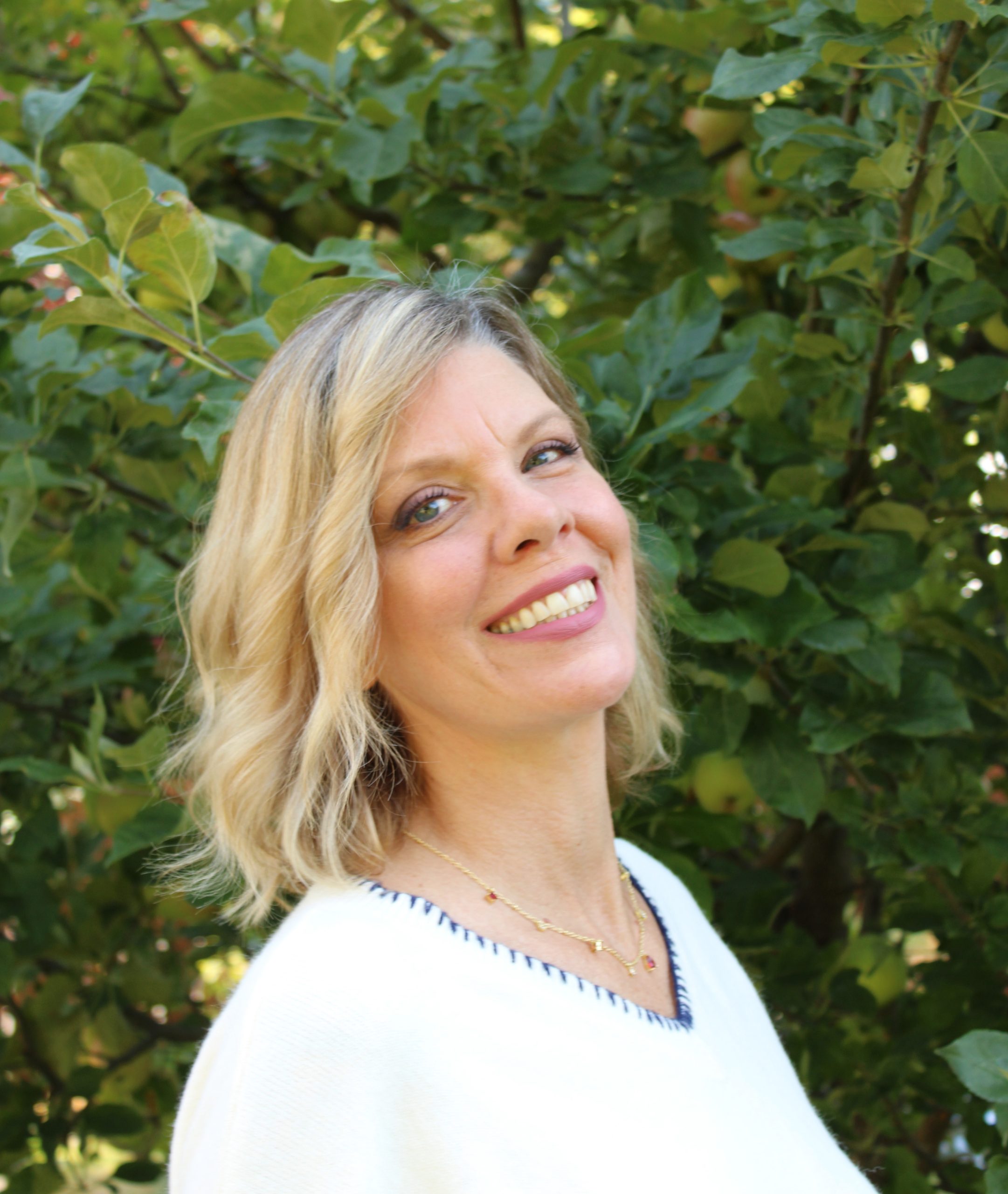
1. Tell us a bit about yourself — where you’re based, and what you were doing before Pilates Teacher Training came into focus.
I am 54, based in Vancouver, Washington. Five years ago, if you had asked me what my life would look like today, I never would have guessed any of it. That I would co-own a martial arts school. That I would be out of a job.
I was a corporate high-achiever, but somewhere along the way I became an empty nester, lost the community I’d built teaching dance fitness, and got laid off from a career I’d given over two decades to. I needed to find my thing. In walks Pilates.
Kung fu has been a family affair for years—my kids started training at five, my husband joined soon after, and when our Sifu retired, we took over the school to keep our community alive. It is a family business where I handle operations behind the scenes while the rest of the family teaches. But when that corporate chapter ended, I still needed something that felt entirely like mine.
That search for my own path is what led me right to Pilates.
2. What first drew you to Pilates Teacher Training?
When my corporate job vanished, my dance community disappeared, and menopause hit all at once, I picked up strength training to keep myself anchored. Then, super frustratingly, I injured my back right as I was feeling strong again. I had always written Pilates off as something strictly for the ballet-dancer body type. It just did not feel like my kind of space. But when my physical therapist suggested it for back rehab, I gave it a shot. The real turning point was when I was at UCLA Medical Center supporting a best friend while her husband was a patient. I overheard a physician assistant and two surgeons—middle-aged women who honestly looked like they walked straight off the cast of Grey’s Anatomy—talking about how they had to leave right at 6:00 to make it to their Pilates class. Watching these high-powered women doing high-stakes work refuse to skip their movement practice made me sit up. If these baddies keeping human beings alive prioritized it that hard, I figured I better pay attention. I tried it and fell head over heels instantly. As John Howard Steel talks about in Caged Lion, it is hard to put your finger on exactly why Pilates is so magic, but it just makes your body feel good. Getting my body back felt amazing, but pretty soon my instructor brain kicked in. We already offer tai chi as a healing art at our school, and I started seeing how perfectly Pilates would fit right alongside it. Looking at our martial arts community putting their bodies through the wringer every day, I realized how badly they needed smart tools for recovery and longevity. I did not just want this practice for myself anymore. I wanted to learn how to teach it so I could share that feeling with everyone else.
The turning point
3. What made you decide to go from practicing Pilates to wanting to be an Instructor?
For me, making the jump from student to instructor came down to my absolute favorite superpowers: teaching, building community, and using my skills to help others. Once Pilates started working its magic on my back, I didn’t just want to practice it. My instructor brain immediately kicked in. I love breaking things down, figuring out how the body moves, and guiding people through that “aha!” moment when a movement finally clicks. Teaching is in my bones, and I realized how incredible it would be to create that same supportive, empowering community on the mat that we’ve built in our martial arts school. I wanted to take everything I know about education and leadership and use it to help people feel stronger, safer, and more at home in their bodies.
4. Why did you choose Balanced Body Education® over other options?
Coming from a background in learning and development, I am pretty critical when it comes to curriculum design. I was looking for structure, depth, and real educational rigor. I did not want a quick weekend certification. I wanted a program that respects anatomy and actually teaches you how to teach, not just a list of exercises. Doing my research on the Balanced Body Master Trainers is what really sealed the deal for me. These folks are incredibly knowledgeable, and they have that same presence I see in a skilled, experienced Kung Fu Sifu. Watching the way our Sifu has impacted my family’s training showed me how much the quality of the instructor matters, and the Balanced Body team has that level of expertise. The flexibility was a huge factor, too. I have worked remotely for most of my career, so I know how to make virtual training effective. While nothing beats in-person work, there just aren’t a lot of local offerings in my area. I know I will have to travel to get my in-person hours done—and I am fully committed to doing that— but having the hybrid option makes this path actually possible for me. It is the perfect blend of high-level mentorship and the flexibility I need to make it work.
5. What was your biggest fear or hesitation before you started your teacher training?
Honestly? My age and my body. At 54, stepping into an industry that is still so heavily saturated with young, hyper-flexible, “ballet-body” stereotypes can feel downright intimidating. I worried I didn’t look the part, and I wondered if my back would hold up under the physical demands of intensive training. There’s a vulnerability in starting completely over at this stage in life. But I had to remind myself that movement isn’t about perfection; it’s about progress. I focus on getting 1% better every single day. Once I let go of the pressure to look or move a certain way and just embraced being a beginner, the fear melted away. If anything, my lived experience is my biggest asset now, not a weakness.
Inside the experience
6. What’s surprised you most about your teacher training so far — anything you didn’t expect?
People always talk about how expensive Pilates classes are, but going through this process has made me completely understand why. It takes an immense amount of depth, anatomy knowledge, and precision to be a truly good instructor. You aren’t just memorizing a routine; you are learning how to safely navigate the human body. What really surprised me is the sheer diversity in learning and movement. Every single body is completely different. What works for one person’s alignment or nervous system won’t work for the next, and there is no “one size fits all” formula. Training has shown me just how much diagnostic thinking, observation, and adaptability it takes to meet a student right where they are. It is so much more rigorous and nuanced than I ever imagined, and that complexity is exactly what makes it so rewarding.
7. Has there been a moment where something “clicked” and you thought, “okay, I can really do this!”
The real “click” happened when I recorded myself practicing and watched my form back. Seeing it on video, analyzing my own alignment, and realizing I actually knew what to look for and how to fix it was a huge turning point.
It tied right into how much I genuinely love geeking out over anatomy and movement principles. I have actually started a running bit at home where I teach my family one new piece of anatomy per week, quizzing them on things like the erector spinae while we are hanging out. And it bridges right over onto the mat. My husband is a second-degree black belt and is deeply skilled in tai chi, which is already an incredible internal healing art. But introducing him to Pilates opened up a totally different kind of conditioning. After just one session, he admitted he was sore in places he had never felt sore before.
Pilates has this way of finding your blind spots immediately and showing you real quick where you need to focus. Seeing how seamlessly my newfound anatomy knowledge clicked with practical movement, and watching how well Pilates complemented his martial arts background, was the lightbulb moment for me. I realized I do not just understand this stuff; I love living it. That was the exact second I thought, Okay, I can really do this.
8. What’s been the hardest part of teacher training so far, and how did (are) you work through it?
The hardest part has been navigating the physical demands of learning all the movements while also stepping into the mental weight of instructor responsibility. When you care deeply about keeping people safe, managing the fear of hurting someone, building cueing confidence, and getting over the imposter syndrome can feel pretty daunting at first. Working through it has meant leaning heavily on practice—and thankfully, I have friends and family who do not care if I make a mistake! Practicing on people who love me and give me grace takes the pressure off and lets me stumble through the awkward phrasing while I find my voice. It also helps to remember that I don’t need to know everything overnight. Just like with the 1% rule, trusting the process and chipping away at it consistently is the only way to get through the overwhelm. Practice builds that internal trust.
Looking ahead
9. Is there a special population you see yourself teaching or a niche you are drawn toward?
My vision is to bridge the gap between martial arts and intelligent recovery. Because our school already offers tai chi as a powerful internal healing art, I know firsthand how much the body needs a balance of intensity and restoration. Personally, I want to stay mobile for the long haul and pass that gift on to others.
I want to bring this to the students, parents, and grandparents at our school. Our community works hard, and by combining tai chi with mat Pilates, we have the ultimate toolkit for long-term body protection. As I develop a healing-rooted safety program, I see Pilates as the perfect foundation to create a space where fighters, parents, and grandparents alike can stay resilient, pain-free, and strong for years to come.
10. Where do you hope Pilates takes you — in the next year, and the next five years?
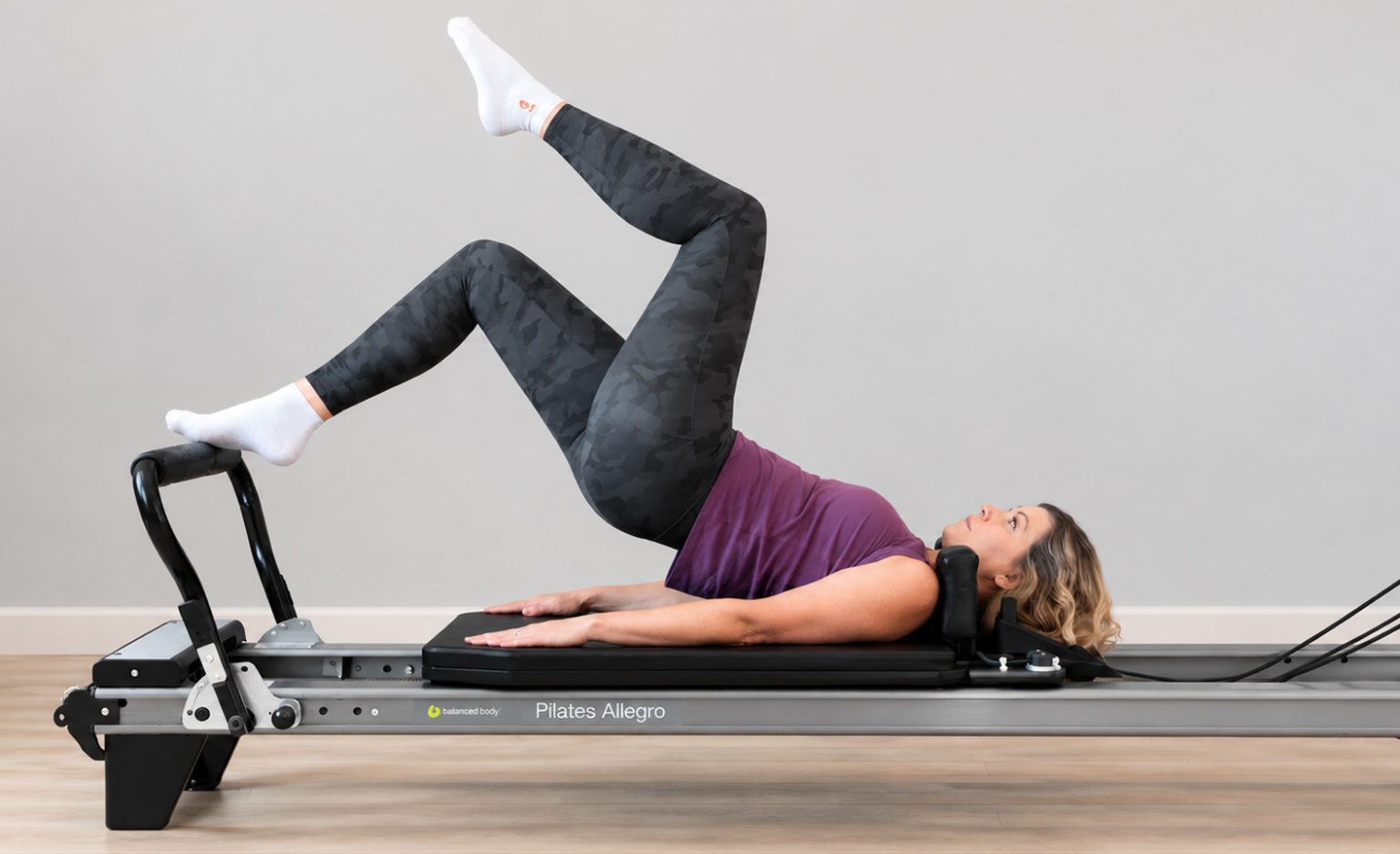
Over the next year, my focus is on learning, practicing, and refining. I am getting practice weekend mat classes up and running at the kung fu school, which is the perfect laboratory for me to put all this training into practice with friends and family. I also just brought a reformer into my home studio, so that is where I am really going to deepen my personal practice and work on my reformer instructor training. I am staying open to what comes next, but I could eventually see myself getting comprehensively certified and taking on private clients there as well. Looking five years out, honestly, who knows where it will go? But I love dreaming about the possibilities. I would love for my daughters to also become Pilates instructors. Maybe we will open our own studio together, or perhaps we will find a way to expand our home studio or keep growing those classes at the kung fu school. And who knows, maybe we will even offer retreats in some tropical part of the world where my family can teach martial arts and I can offer Pilates. Whatever the specific setup is, I just want it to be a shared journey of movement, healing, and community.
The takeaway
11. What would you say to someone who’s on the fence about starting their own Pilates teacher journey?
Just get out of your own way. Stop waiting to feel totally ready, because you do not find readiness before you start. You build it along the way. We talk so much about the core principles of Pilates: breath, concentration, control, centering, precision, balanced muscle development, rhythm and flow, and whole-body movement. But those are not just mechanics for an exercise on a mat or a reformer. They are a blueprint for how to approach your own life and growth. As Lolita San Miguel always reminds us, movement is freedom, and you just have to start where you are. You do not need a background in dance, and you do not need to know everything overnight. If you have the desire to help people heal and understand how bodies move, you just have to trust the process. Take a breath, center yourself, and take the leap.
12. Finish this sentence: “Pilates has taught me…”
Pilates has taught me that strength is not about forcing your body into submission, but about listening to it, meeting it right where it is, and trusting the process one small, intentional movement at a time.
Wrap-up
13. Anything else you’d love people to know about your journey in teacher training?
Stepping into this training has been a reminder that learning should never stop. It’s never too late to pick up a new craft, challenge yourself, and build something meaningful. Interestingly, this journey has really opened my eyes to the power of breathwork. I’ve realized just how vital intentional breathing is—it’s not just a foundational movement principle, it’s the anchor for everything else we do. Whether I’m bringing my daughters into the fold, supporting our martial arts community, or just focusing on my own long-term mobility, this journey is about so much more than learning exercises. It’s about waking up, showing up for yourself, and realizing that your best chapters are entirely up to you to write.
All ideas and assertions expressed in The CORE are those of the individual contributors, offered to spark conversation, enrich understanding/inspire growth and share diverse perspectives within our community. They may not necessarily reflect the views of Balanced Body®.
Laura Whitaker
Laura Whitaker spent twenty years in the corporate world before pivoting to run operations at her family’s martial arts school in Vancouver, Washington. Having wrapped up her Balanced Body Movement Principles, Mat 1, and Mat 2 training, she is eager to keep learning as much as she can on this instructor journey. Whether she is geeking out over anatomy and smart recovery or practicing on her home reformer, she is proof that your best chapters are yours to write.