

Pelvic alignment for a new client
In my first post on assessing pelvic alignment, we discussed and discovered the importance of Pelvic Curls and Hip Rolls. We’re now going to move on to Side Knee Float and Bent Knee Opening!
Friendly Reminder: Teach the bony Landmarks

If your clients know their sacrum from their pubic bone your job will be SO much easier. While we don’t expect our clients to take on anatomical jargon we can encourage them to understand their own bodies in more detail. Teaching your clients that their pubic bone sits at the front of the pelvis and that two fan shaped bones form the sides is an easy place to begin. Our sacrum sits between those two fan shaped bones. We have a tail bone below our sacrum and our lower back vertebra above our sacrum. Nothing scary. Nothing overly technical. Just a simple way of explaining the body and speaking the same language.
Side Knee Float/Bent Knee Opening

This exercise is soothing to the hips and a great way for new clients to understand the relationship between their hip joint and the pelvis as a whole. It is possible for them to move one and not the other! This exercise gives us an opportunity to explain stability through the transverse plane too. Focus on where you would like to see movement rather than where you want stillness (we are in the business of encouraging movement after all). Start by moving both legs at once to introduce the awareness of release through the inner thighs and pelvic floor and the way the femur bones roll in the hip sockets to return. When we progress to the single leg version, encourage a sense of release through the inner thigh muscles of the moving leg. When the pelvis starts to shift, pause and regroup- ask if the leg is able to release any further (it often will) and act accordingly. On the return, notice the sense of grounded-ness through the pelvis as symmetry is restored. When you change to the single leg version work on the same side for a few repetitions. This will allow the client to gain motor control before the challenge of alternate patterns is introduced.
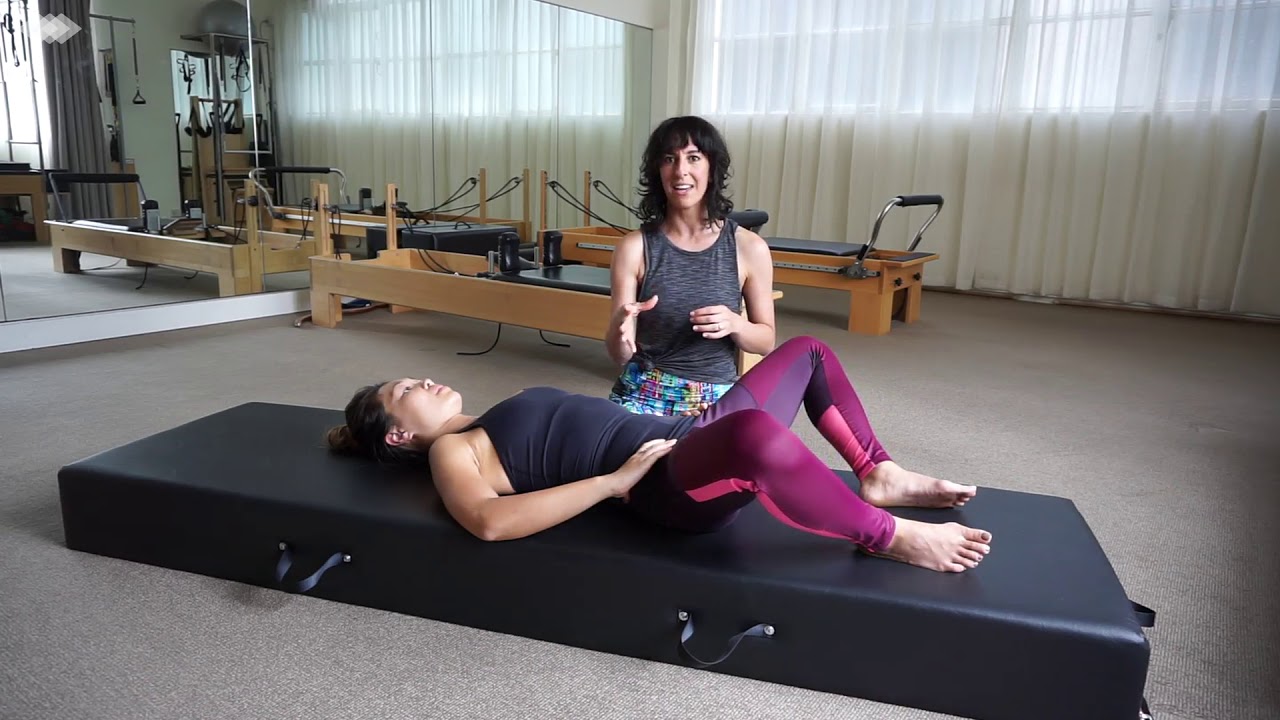
My closing mantra for this series: Teaching our clients that movement occurs during muscular release AND activation will help our goal of efficient movement and allows space for the breath to be involved. The quietness of these movements will give your client the opportunity to listen to what their body is telling them. Before they know it, our Pilates newbies will, “be in control of their body and not at its mercy.”
All ideas and assertions expressed in The CORE are those of the individual contributors, offered to spark conversation, enrich understanding/inspire growth and share diverse perspectives within our community. They may not necessarily reflect the views of Balanced Body®.

Joanne Bezzina is a Sydney-based Pilates educator, presenter and studio director. Her philosophy of connected movement is driven by her passion to achieve a mind and body connection that builds strength and flexibility and teaches how to form deeper client connections and better results.
Joanne won the 2017 Pilates Anytime Next Teacher Contest. She is a PMA® Certified Pilates Teacher, Pilates Alliance Australasia Principal Trainer Member and educator and examiner for Polestar Pilates. A strong Pilates advocate, she founded the Sydney Teachers Social Group and is a Pilates Alliance Committee member.
A highly experienced teacher, Joanne’s classes are in high demand. Her workshops are highly sought after by instructors to improve their teaching skills and connect better with their clients. Find “Jo” on Instagram: joannebezzinapilates
